The National Institute of Mental Health reports that 6.8% of US adults experience PTSD at some point in their lives, with women affected at nearly three times the rate of men (NIMH). Many people manage symptoms for years without addressing what's underneath them.
Holistic trauma therapy takes a different approach. Instead of isolating symptoms, it treats the whole person: nervous system, emotions, body, and relational history. This guide covers the core modalities, how nervous system regulation works, and why family-systems approaches like Family Constellation work often reach what talk therapy alone cannot.
Key Takeaways
- Holistic trauma therapy addresses the nervous system, body, emotions, and family patterns, not just symptoms
- Combining evidence-based therapy with somatic, mindfulness, and movement-based work improves outcomes
- Family Constellation work can surface inherited or adoption-related trauma that talk therapy often misses
- Nervous system regulation is often the foundation for deeper healing work
What Is Holistic Trauma Therapy?
Holistic trauma therapy is an integrative approach that addresses the psychological, physical, and relational dimensions of trauma at once, rather than treating each in isolation.
The American Psychological Association defines trauma as a disturbing experience that produces intense fear, helplessness, dissociation, or confusion severe enough to leave a lasting negative effect on well-being (APA). That "lasting effect" isn't just psychological. Trauma gets stored in the nervous system itself, which is why talk therapy alone sometimes falls short.
The Three Phases of Recovery
Because trauma lives in both mind and body, recovery usually unfolds across more than one layer of experience. Psychiatrist Judith Herman's framework describes that process in three phases:
- Safety and stabilization – establishing physical and emotional safety before deeper work begins
- Remembrance and processing – working through the traumatic material itself
- Reconnection and integration – rebuilding a life and identity beyond the trauma
Herman was clear that these phases don't move in a strict straight line. People often circle back to safety work even after progress in later stages. This oscillation is normal, not a setback.

Core Holistic Modalities for Trauma Healing
No single modality works for everyone. Most holistic practitioners draw from several approaches, often in combination.
Common building blocks include:
- Body-based and somatic work that settles the nervous system
- Mindfulness, meditation, and breath practices
- Movement therapies such as yoga, Tai Chi, and qigong
- Creative arts, systemic/Family Constellation work, and daily foundations (sleep, nutrition, routine)
Somatic Experiencing and Bodywork
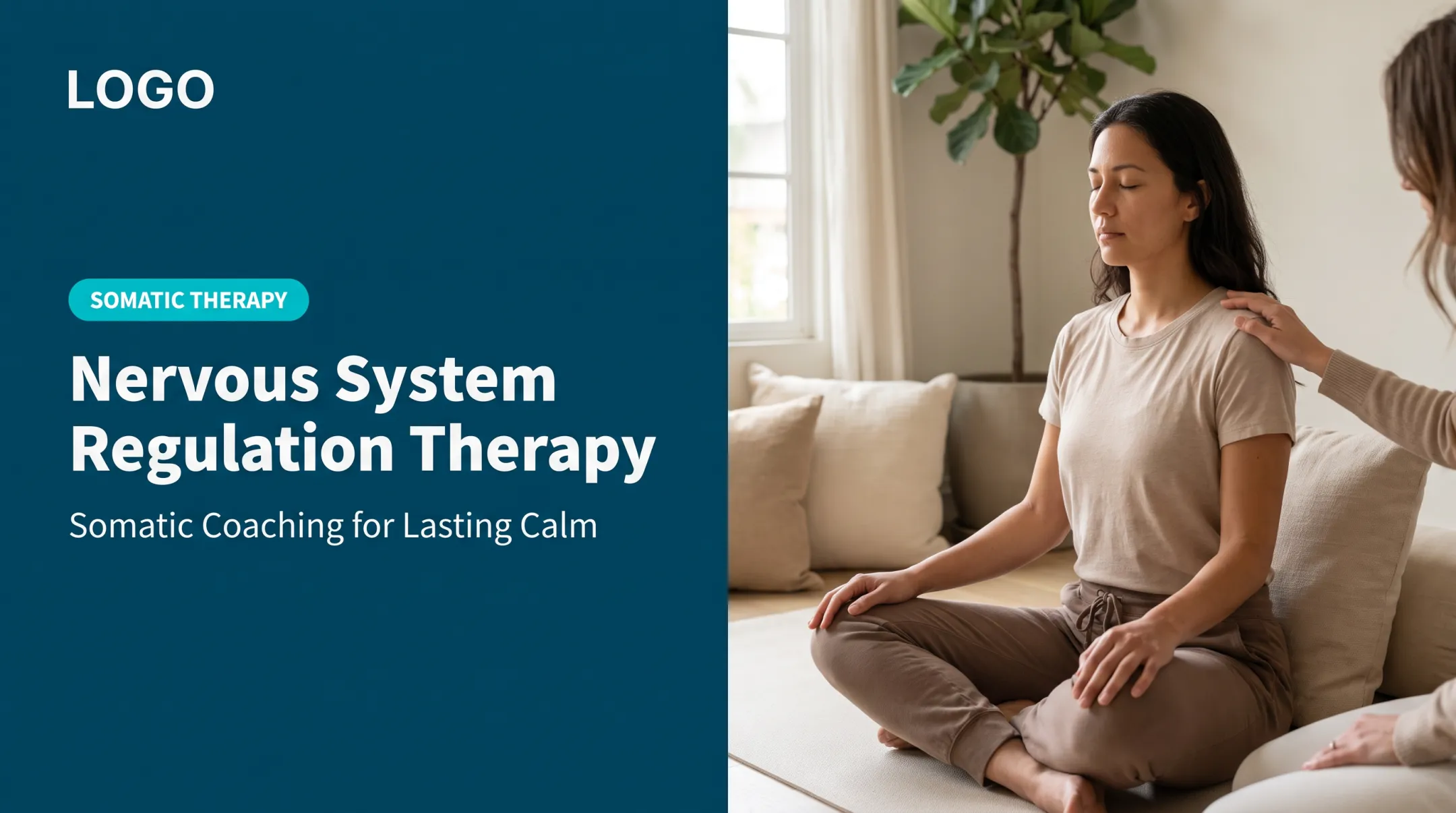
Somatic Experiencing works from the premise that trauma is stored in the body, not just memory. Related embodiment and craniosacral-informed somatic coaching start from the same idea: the body holds what talk alone may not reach.
A 2017 randomized controlled trial of 63 adults with PTSD tested Somatic Experiencing against a wait-list control. 44.1% of participants who received Somatic Experiencing no longer met PTSD criteria after treatment (study). The sample was small, but the effect size was notable.
Mindfulness, Meditation, and Breathwork
A review of mindfulness-based interventions found that veterans who finished an 8-week mindfulness program improved more on PTSD symptoms than a present-centered comparison group (review). Reduced cortisol response tracked with that symptom change. Breathwork shows a smaller but consistent effect on general stress reduction across studies.
Movement-Based Therapies
Yoga, Tai Chi, and qigong help reconnect body and mind after trauma disrupts that link. A systematic review of 16 randomized trials found yoga produced moderate improvements in PTSD symptoms, depression, and anxiety (review). Tai Chi and qigong research is still pilot-stage, but early results point toward better sleep and stress relief.
Creative Arts and Nonverbal Modalities
Some trauma is hard to put into words. Creative arts therapies (music, drama, art, and dance) give people a way to process experiences that resist language.
Family Constellations and Systemic Work
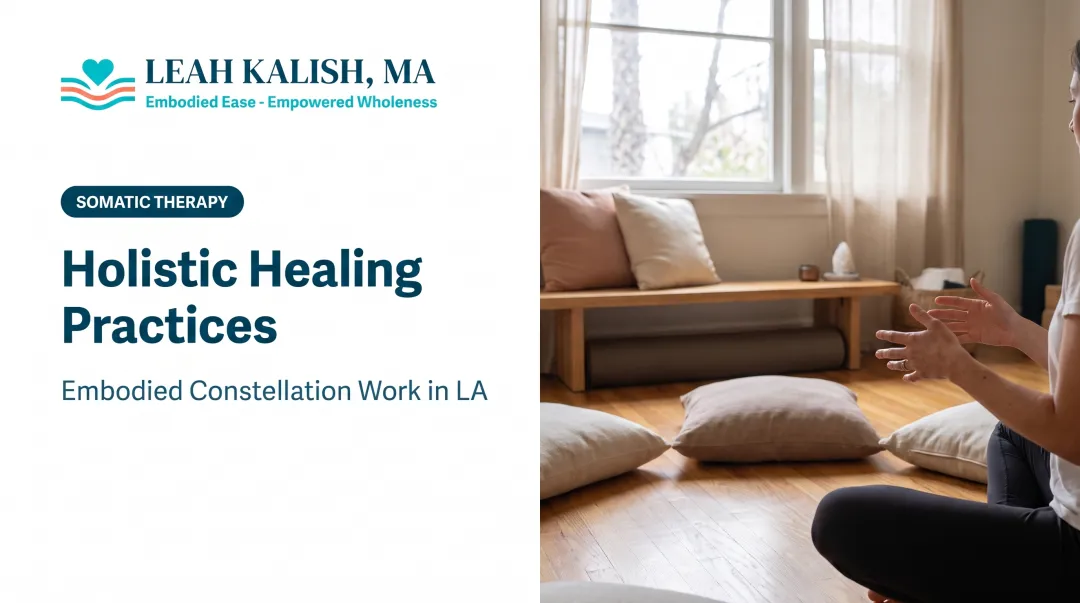
Family Constellations address trauma held in family systems and patterns carried across generations. In individual, couples, or group sessions, people can see loyalties, grief, and unfinished dynamics that keep the nervous system stuck—and often pair this work with somatic support.
Daily Foundations That Support Healing
Nutrition, sleep, and daily routine matter more than many people expect. PTSD trials link poor sleep quality to smaller treatment gains, so basic regulation habits often sit alongside formal modality work.
The Family Constellation Approach: Healing Generational and Family Trauma
Talk therapy tends to focus on the individual's own history. Family Constellation work looks further back, at patterns inherited from the family system itself.
How It Differs From Talk Therapy
Developed by German psychoanalyst Bert Hellinger, Family Constellation therapy uses a group or facilitated setting to reveal hidden dynamics within a family system. A 2021 systematic review of 12 studies found statistically significant improvement in nine of them, with a meta-analysis showing a moderate positive effect on general psychopathology (review).
Instead of staying inside your own narrative, you watch family relationships take shape in physical space. That view can surface:
- Adoption-related grief that never had words
- Unresolved loss carried across generations
- Patterns of struggle that repeat without an obvious personal cause
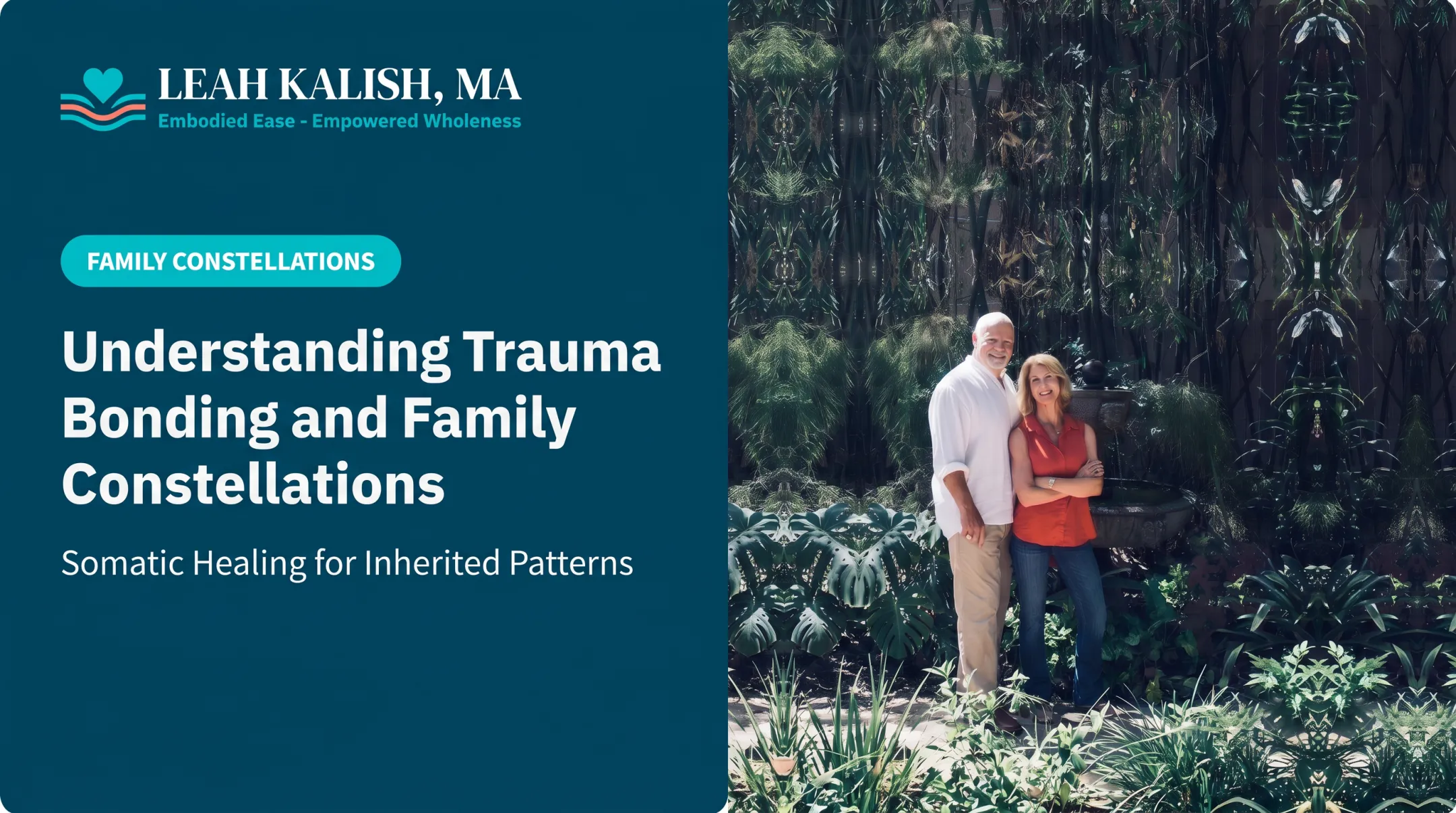
Working With Leah and Bruce Kalish
Leah and Bruce Kalish combine Family Constellation work with nervous system regulation, in Los Angeles and over Zoom. Sessions usually follow a clear arc:
- Intake questionnaire on your concern and family history
- Use of your feelings, words, and images to map entangled dynamics
- A facilitated constellation that makes those dynamics visible

Many clients report a meaningful shift within a single session.
Mark Wolynn, founder of the Family Constellation Institute and author of It Didn't Start With You, has described them as "masterful facilitators, bringing warmth, depth, wisdom and compassion to those whose hearts they touch."
Client outcomes reported to the practice include:
- An adoptee describing a "profound, life-changing" shift in her relationship with her adoptive family
- A client experiencing relief from 18 months of chronic headaches and nerve pain after combined constellation and embodiment work
- A partner developing deeper compassion after seeing her partner's childhood trauma made visible
This approach often fits people who are:
- Feeling emotionally stuck despite prior therapy
- Navigating adoption-related grief or identity questions
- Processing unresolved loss, grief, or a major life transition
- Clinicians seeking personal work or professional depth
Understanding Nervous System Regulation in Trauma Recovery
Trauma activates the body's fight-flight-freeze response as a survival mechanism. The problem comes when that activation doesn't switch off.
Chronic nervous system activation shows up as:
- Persistent fatigue despite adequate rest
- Unexplained physical pain or tension
- Insomnia or disrupted sleep patterns
- Emotional reactivity that feels disproportionate to the trigger
According to the NIMH, these fear responses are a normal part of survival, but how long they linger varies widely from person to person. When the system stays stuck on, regulation has to come before deeper insight work.
Grounding as a Foundation
Grounding techniques help bring an overactivated nervous system back to baseline. In Leah Kalish's Embodiment Process sessions, this looks like:
- Slowing down and settling into a down-regulated state
- Attuning to bodily sensations without judgment, instead of getting caught in thoughts
- Softening awareness to observe stress patterns without reacting
- Differentiating the client's own feelings from inherited emotional patterns
This regulation work often has to happen before deeper emotional or family-systems processing can be effective. A dysregulated nervous system can't fully integrate insight, no matter how accurate that insight is.

Building a Sustainable Healing Journey
Healing rarely follows a straight line, and it rarely happens in isolation.
Support Systems Matter More Than People Think
A meta-analysis covering more than 62,000 people found a consistent, moderate association between social support and lower PTSD symptoms, with the relationship running in both directions (social support and PTSD meta-analysis). Isolation tends to worsen symptoms; connection tends to buffer them.
Combining Approaches
Evidence-based therapies like CBT and EMDR pair well with holistic modalities. A 2025 pilot study on yoga with EMDR for complex PTSD found both the combined group and the EMDR-only group improved, without one clearly outperforming the other (yoga and EMDR pilot study). That result is a useful reminder: there is no single right formula, only what works for the individual.
In the Kalishes' practice, this often looks like sequencing: Family Constellation first, to surface systemic patterns, followed by Embodiment Process sessions to help the body integrate what surfaced. One client, Rachelle, described it directly: "the true healing happened with the blending of constellation with embodiment."
Expect to experiment, adjust, and stay patient. Sustainable healing is less about one perfect method and more about a mix of support, body-based work, and evidence-based care you can keep returning to.
Frequently Asked Questions
What are the three phases of trauma recovery?
Judith Herman's framework describes safety/stabilization, remembrance/processing, and reconnection/integration. These phases often overlap rather than proceeding in strict order.
How long does CPTSD last?
There's no single timeline. Duration depends on treatment, support systems, and trauma severity. Some people improve within months; others need longer care. A licensed professional can assess your situation.
What are some holistic ways to heal trauma?
Somatic work, mindfulness and breathwork, movement therapies like yoga, expressive arts, and family-systems approaches like Family Constellation work are among the most widely used holistic methods.
Can holistic trauma therapy replace traditional therapy?
Generally, no. Holistic approaches work best as a complement to evidence-based clinical treatment, especially for severe trauma or diagnosed PTSD.
What makes Family Constellation therapy different from talk therapy?
It focuses on inherited, family-of-origin patterns rather than solely individual cognitive processing, often revealing dynamics that started generations before the client was born.
How do I know which holistic therapy is right for me?
Start with a consultation or introductory session with a qualified facilitator. Many practices, including Leah and Bruce Kalish's, offer free introductions or reduced-rate sessions to help you find the right fit.